
Whoa! Okay — quick confession: I check a block explorer more than I check the weather. Really. My instinct said that on-chain data would feel dry, but it hit differently the first time I tracked a token mint and saw the whole story unfold in front of me. At first it was curiosity, then it became a tiny obsession. Hmm… something felt off about a token transfer pattern last month and that little itch pushed me deep into Solana’s transaction graph. I learned a lot fast, and some of it was messy, and some of it was illuminating.
Short version: token trackers are the binoculars of Solana. They let you see who moved what, when, and sometimes why. Traders love them for hot-wallet snooping. Devs love them for debugging, and auditors… well auditors get the best dirt. But here’s the thing. Not all explorers are built equal — index freshness, UI clarity, and token metadata quality vary a lot. Some explorers show raw tx data and leave you squinting; others try to be helpful with dashboards, labels, and token holders lists that make sense at a glance.
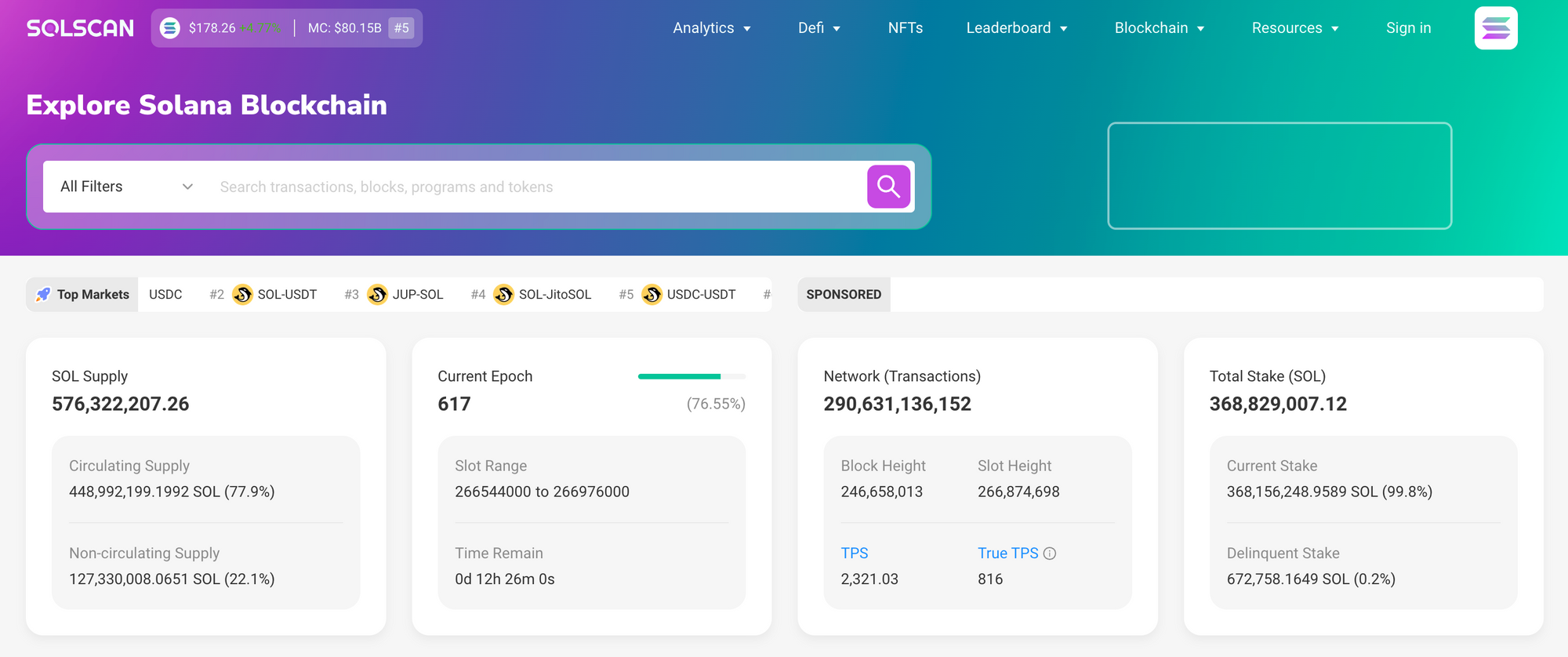
I used Solscan as my go-to for months. It’s fast, it’s tidy, and it often surfaces token metadata and holder distributions without much fuss. I’m biased, sure, but that hands-on day-to-day comfort matters. When you need to verify a token mint or check if airdrops were distributed to the right wallets, a reliable token tracker saves time — and sometimes prevents bad trades. And, uh, it keeps you from doing something dumb in the heat of FOMO.
What a Good Token Tracker Should Do (and how Solscan helps)
Here are practical features I look for. First: mint address clarity — every token needs a canonical mint link so you don’t mix it up with lookalikes. Second: holder distribution — who owns the top 10% of supply? That tells you risk of a whale dump. Third: real-time transfers and confirmed block indexing — because stale indexes are a trap. Fourth: token metadata and links to token programs — that helps verify authenticity quickly. Fifth: easy CSV export and API access — for deeper offline analysis.
Okay, check this out — I end up on the solscan explorer official site more than any other. It gives me the quick snapshot plus the ability to drill down when I need to. Sometimes I want the big picture, sometimes I want the nitty-gritty, and that flexibility is the big selling point. Also: it loads fast here in the US, which matters when latency equals missed trades.
My instinct said “simple is better,” but then I realized that simplicity needs to hide complexity without losing transparency. Initially I thought a minimal UI would be enough, but then I kept needing trace links — token program interactions, approvals, stakes — and that complexity needed to be shown on demand. Actually, wait — let me rephrase that: show me the advanced stuff only when I ask for it. Don’t make it a puzzle to find transaction logs or token transfers.
One practical tip I use daily: always verify the mint address against the project’s official channels before trusting token metadata. On one hand, the token name and logo are convenient; on the other hand, bad actors spoof metadata all the time. So, cross-check. That extra 30 seconds saved me from buying a scam token once. I’m not 100% sure I would’ve avoided it without that habit… but probably.
Another workflow I lean on is holder clustering. If 70% of supply sits in three wallets, that’s a red flag for me. On Solana, token supply dynamics move quickly because of low fees; a whale can move markets in under a minute. So I watch wallet flows, recent large transfers, and token swaps across AMMs. If transfers chain through mixer-like patterns or through multiple small wallets rapidly, I pause and dig. Something felt off? Then I follow the money until I get comfortable.
From a dev perspective, token trackers are equally crucial. They help trace program failures, spot incorrect decimals metadata, and diagnose mint authority issues. I once debugged a token minting bug by tracing a failing instruction back to an unexpected program call. On paper the logs looked fine, but the explorer’s decoded instructions showed a different story — small detail, big save.
Seriously? Yes. The smallest detail often saves you the most. And, um, here’s my down-to-earth advice: use watchlists and alerts. Set transfer thresholds and get pinged when large moves happen. It buys you time to act. Also export holder snapshots before a big event; that way you can prove distribution state if disputes pop up later. These are simple practices, but they feel like lifejackets when things get choppy.
There’s more — privacy and transparency trade-offs. On Solana, anyone can see balances and transfers. That transparency is great for verification but terrible for secret strategies. If you’re trying to hide a position, well, don’t. On the flip side, transparency helps community trust when token teams publish proof of burns or vesting releases. Watch for vesting schedules shown on token pages; they change how I value token unlocks over time.
Oh, and by the way… not all token trackers handle NFTs or SPL tokens the same. If your project mixes NFTs and fungible tokens, pick an explorer that surfaces collection-level stats as well as token-level transfers. It’s a small detail most people miss until they need it, and then it’s maddeningly obvious.
FAQ
How do I verify a token is legit?
Cross-check the mint address against the project’s official channels. Look at recent transactions, check the top holders, and inspect the token program interactions. If metadata looks off, dig into on-chain instructions — labels and logos can be spoofed. Also, small quick habit: search for the token mint on multiple explorers and compare results.
Can token trackers help catch rug pulls?
Yes, often. Sudden large transfers to unknown wallets, fast sales through liquidity pools, and concentrated holder distributions are common signals. Watch for abnormal approval patterns and rapid token-to-stablecoin swaps. Alerts for large transfers are your early warning system.
Which features should developers expose to improve trust?
Publish clear mint addresses, provide vesting schedules, and keep token metadata accurate. Offer proofs for burns and locked liquidity, and make audit reports accessible. Transparency reduces friction for users and builds long-term confidence — very very important for long-lived projects.